Exterior
Siding, sequenced with the rest of the work
Siding usually comes off because something else is happening, and an open wall is the cheapest time to fix everything behind the cladding: sheathing, barriers, flashing and insulation.
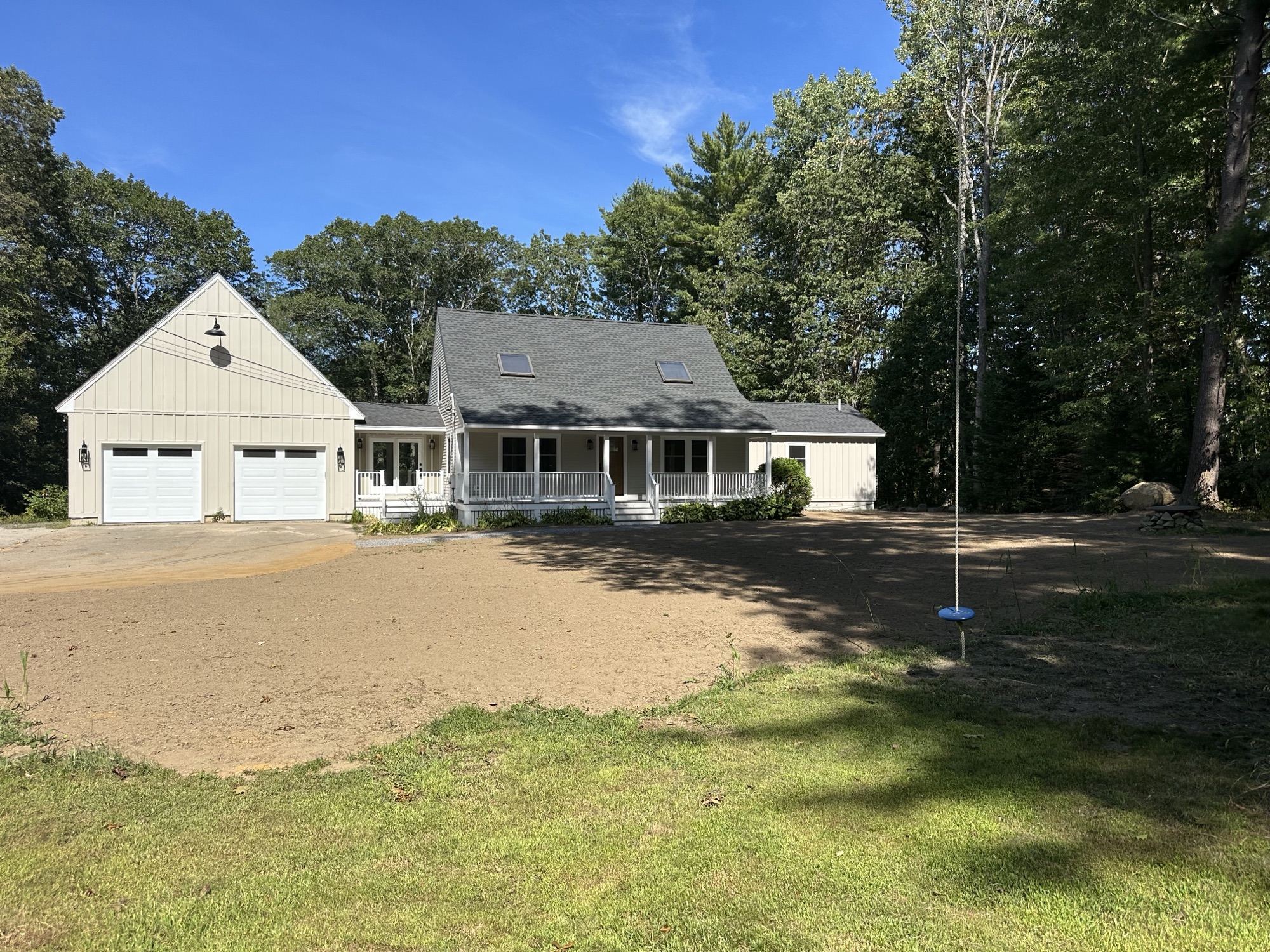
- Fiber cement, engineered wood, vinyl and cedar
- Full weather-resistive barrier and flashing detailing
- Rainscreen where the exposure calls for it
- Windows, trim and siding on one sequence
- NH Seacoast and southern Maine
When the siding is coming off anyway
Siding gets removed maybe twice in the life of a house, and while it is off, everything behind it is accessible for the price of already being there: rotted sheathing, a housewrap that was never taped, window flashing that was surface-caulked in 1994, penetrations cut oversize and never sealed, and the wall cavity itself if you want insulation.
Replacing windows now and siding in four years means paying twice to open the same wall, and it means the new windows get flashed into an old barrier that was not designed to work with them. Combining the roof and the siding shares one round of staging, one dumpster, one lift rental and one stretch of disruption for you and your neighbors.
- Sheathing probed and replaced where it is soft, not sided over
- Weather-resistive barrier installed and taped as a continuous drainage plane
- Windows and doors set and flashed, with sill pans and head flashing, before any cladding goes on
- Mounting blocks for lights, bibs, vents and outlets instead of caulk around a hole
- Insulation and air sealing addressed while the wall is open, if that is in scope
The drainage plane behind the siding
Water gets behind every cladding material eventually, through wind-driven rain, capillary action at laps and condensation, so what keeps a wall dry is the drainage plane underneath: a weather-resistive barrier taped at the seams, lapped shingle-style so every upper piece sheds onto the one below, and integrated with the window flashing rather than butted to it.
On exposed walls, and increasingly as a default with fiber cement and wood products, we furr the wall out to create a rainscreen gap so the back of the siding can dry and any water that gets past has a path down and out at the bottom. Under-sill trim, correct clearances above roofing and at grade, head flashing over trim boards, and a kickout flashing where a roof edge meets the wall finish the same job, and none of it is visible from the street, which is exactly why it is the first thing cut on a cheap bid.
Fiber cement, engineered wood, vinyl and cedar
Vinyl is the least expensive to buy and install and never needs painting, with real tradeoffs: limited colors that can fade, panels that must hang loose because they expand and contract, brittleness in deep cold, and distortion near a grill or a neighbor's reflected low-E glass. Fiber cement costs more in labor, and in exchange it is dimensionally stable, holds paint for a long time, does not burn, and shrugs off freeze-thaw, provided the clearances, sealed cut edges and fastening are done to the manufacturer's spec.
Engineered wood sits between the two: lighter than fiber cement, longer boards so fewer seams, faster to install, with cut ends that need prompt sealing. Cedar shingles and clapboard are the traditional Seacoast exterior and still the right call on older homes in Portsmouth, Kittery and York, weathering naturally if you let them or holding a finish if you maintain it.
How it goes
How the job runs
01
Walk the walls and probe
We look at every elevation, check for soft sheathing, see how the existing windows were flashed, and note the exposures, because the wall that takes the weather is rarely the wall you look at most.
02
Material, color and scope in writing
Samples in hand and, where it matters, a mockup on the actual wall so you see the color in your own light. The scope names the barrier, the flashing details, the trim package and how sheathing repairs get priced.
03
Strip and dry in, one elevation at a time
We take off only what we can dry in the same day. Old siding comes off, sheathing gets repaired, the weather-resistive barrier and flashing go on, and the wall is closed to water before we leave.
04
Trim first, then siding, then the punch list
Corners, window and door trim, frieze and rake go on, then the siding runs into them. We walk every elevation with you, and on painted products we handle touch-up of cut ends and fastener heads.
What we install
Materials and brands we work with
- Fiber cement siding
- Engineered wood siding
- Vinyl and insulated vinyl
- Cedar shingles and clapboard
- Board-and-batten
- Housewrap and weather-resistive barriers
- Rainscreen furring
- PVC and composite trim
- Under-sill and starter trim
- Step and kickout flashing
Want to go deeper on siding?
Nova Roofing & Siding is our exterior division, with the full material and warranty detail.
Visit the roofing & siding siteQuestions
Straight answers
- Do I have to be doing a bigger project to have Nova side my house?
- No, we do siding on its own. The reason to bring it to Nova Building Co is when the siding is entangled with other work: an addition blending into the existing walls, a renovation with new windows, a roof being done at the same time. Siding alone is what our exterior division at Nova Roofing & Siding is set up for.
- Can you install new siding over what is already there?
- Vinyl over old clapboard with a layer of foam board is a real method, and it is cheaper. It also hides whatever is happening to the sheathing, leaves an old or nonexistent drainage plane in place, and pushes the wall out far enough that windows start to look recessed. We tear off unless there is a specific reason not to.
- Fiber cement or vinyl, which should I buy?
- If the house is a long-term hold, the elevation is visible, or you want a deep color that holds, fiber cement is worth the higher installed cost: it stays flat, holds paint, and will not look tired in year twelve. If budget is the binding constraint, or it is an outbuilding or a property you plan to sell soon, good insulated vinyl is not a mistake. The one thing to avoid is the cheapest fiber cement installation you can find, because done wrong it performs worse than vinyl done right.
- We are near the water in Kittery. Does that change the specification?
- Yes. Salt air corrodes fasteners and flashing metal, so we specify stainless or hot-dip galvanized, and wind exposure drives fastening schedules and can rule out some panel profiles. Sun and salt fade dark colors faster on the exposed side of the house, which is an argument for factory finishes over field paint on those elevations.
- How long will my house be open to the weather?
- Individual walls, not the whole house. We strip only what the crew can dry in before the end of the day, so the barrier and flashing go on the same wall we opened, and if the forecast turns we stop stripping and close in what is open. A re-side typically runs a few weeks on site depending on the size of the house and how much sheathing repair turns up.
Get the siding scoped with the rest of the job
Send us the details and we'll get you a written estimate, without a sales visit you have to sit through.
Showroom in Dover, NH · Serving the New Hampshire Seacoast and southern Maine