Exterior
Roofing, built as part of the whole project
A roof is often one line on a longer scope, an addition tying into the existing roof or a new build going dry before winter, and then it belongs on the same contract and schedule as the work it ties into.
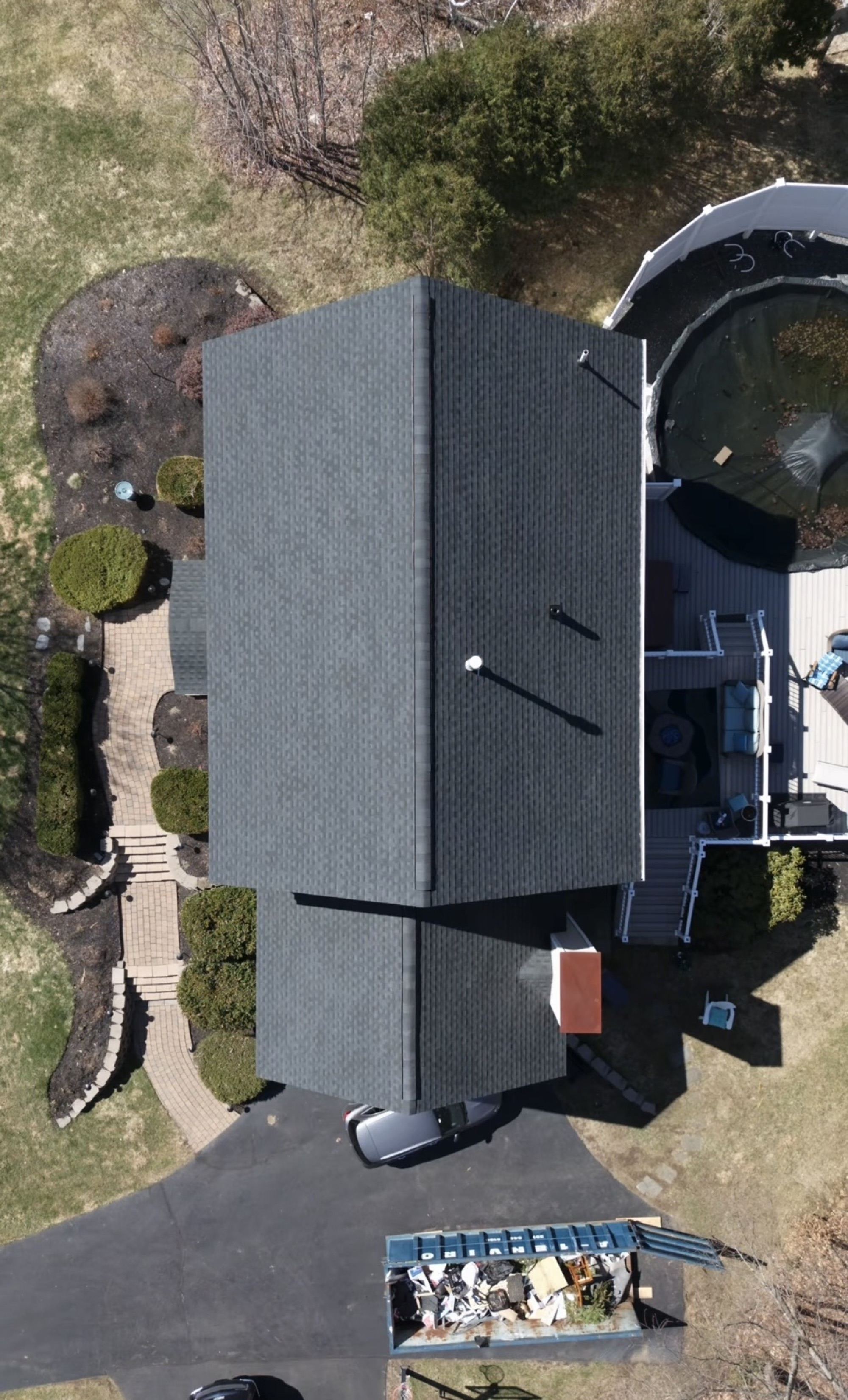
- GAF certified installer
- Architectural asphalt and standing seam metal
- Ice-and-water shield at eaves, valleys and sidewalls
- Roof, siding and trim run as one mobilization
- NH Seacoast and southern Maine
Where the roof fits in a bigger job
On an addition, a renovation or a new build, the roof gets framed by the same carpenters, vented through the same attic and flashed into the same siding, so Nova frames it, roofs it, sides it and trims it under one contract. The flashing at the tie-in is one company's responsibility instead of a conversation between a framer who has already left and a roofer who was never told what the siding crew is doing next month.
Doing the roof alongside siding or window replacement also shares one setup: the same staging, the same dumpster, the same lift and ground protection, one round of neighbor notice. Two separate mobilizations pay for all of that twice.
What a Seacoast roof is up against
Ice dams are the local failure mode: heat escaping into the attic melts snow, the water refreezes at the cold overhang, and the ridge backs standing water up under shingles, which are lapped to shed water running downhill and are not a membrane. The defenses are ice and water shield carried well past the interior wall line, balanced intake and exhaust venting that keeps the deck cold, and air sealing at the attic floor, which is not a roofing item and is exactly why it gets skipped when the roofer is the only contractor involved.
Wind exposure in Rye, Hampton, Kittery and York drives the nailing pattern, starter courses at the rakes as well as the eaves, and hip and ridge selection, and salt air attacks fasteners and flashing metal, so details that would be fine inland get specified differently near the water.
Where the roof meets everything else
Leaks start at intersections, not in the middle of a roof plane: where an addition roof runs into an existing wall, in valleys, behind chimneys with no cricket, and where a roof edge dies into a sidewall, which needs a kickout flashing to throw water onto the siding instead of behind it. Doing those details correctly means getting behind the siding, so step flashing gets woven shingle by shingle and lapped by the weather-resistive barrier above it, and counter flashing gets let into the wall or cut into masonry rather than surface-sealed.
On material: architectural asphalt is the right answer for most houses here, rated as a system when underlayment, starter, field and ridge cap come from one line, and Nova is GAF certified. Standing seam metal costs more up front, moves with temperature instead of fighting it, and outlasts a couple of asphalt cycles; it sheds snow well, which is why snow guards over doors and walkways get planned before the panels go on.
- Step and counter flashing where a roof plane meets a wall, integrated with the housewrap
- Kickout flashing at every roof-to-wall termination above siding
- Crickets behind chimneys wider than about two feet
- Valley detail chosen for the pitch and the snow load
- Intake and exhaust venting checked against the insulation plan before anything is ordered
How it goes
How the job runs
01
Walk it with the whole scope in hand
We measure the roof, look at the decking and the existing flashing, get into the attic to see the ventilation and insulation, and look at how the roof relates to the rest of what you are planning.
02
Written scope, before anything is ordered
Layers to be removed, underlayment and ice and water coverage, flashing details, vent strategy, material and color, and a unit price for rotten sheathing so a discovery does not become a negotiation.
03
Tear off and dry in
Protection goes down, the old roof comes off, the deck gets inspected and repaired, then ice and water shield, synthetic underlayment and drip edge go on. The house is dried in the same day that section is opened.
04
Field, flashing, finish
Shingles or panels, then the details: valleys, step and counter flashing, kickouts, ridge vent and ridge cap. Manufacturer registration and warranty terms are handled in the written scope for your job.
What we install
Materials and brands we work with
- GAF certified roofing
- Architectural asphalt shingles
- Designer and dimensional shingles
- Standing seam metal
- Exposed-fastener metal
- Ice-and-water shield
- Synthetic underlayment
- Ridge and soffit venting
- Drip edge
- Step and counter flashing
Want to go deeper on roofing?
Nova Roofing & Siding is our exterior division, with the full material and warranty detail.
Visit the roofing & siding siteQuestions
Straight answers
- Do I have to be doing a bigger project for Nova to do my roof?
- No, we do straightforward roof replacements too. The reason to bring the roof to Nova Building Co is when it is tangled up with other work: an addition tying into an existing roofline, a renovation opening the walls, a new build that needs to go dry on a schedule. A standalone roof is what our exterior division at Nova Roofing & Siding is set up for.
- Will a new roof stop my ice dams?
- Partly. Ice and water shield stops the water that backs up behind a dam from getting into the house, but dams are caused by heat leaking into the attic, so fixing the cause means air sealing the attic floor, getting the insulation right, and venting that keeps the deck cold. Do only the roofing half and the dams keep coming back.
- Can you shingle over the existing roof instead of tearing off?
- It is sometimes physically allowed, and we generally do not. You cannot inspect or repair the decking under a layer you did not remove, ice and water shield cannot go where it needs to, the flashing stays whatever it was, and the next tear-off is a two-layer tear-off that costs more.
- Will the new shingles on my addition match the existing roof?
- Not exactly. Asphalt fades and weathers, so a ten-year-old roof and a fresh bundle of the same product read as two different colors, especially in flat winter light. On a plane visible in one view we recommend reroofing the whole plane or the whole house; where the new roof is on the back and the old is on the front, matching close is usually fine.
- Can you roof in the winter here?
- Yes, with conditions. Shingle sealant strips need sun and warmth to bond, so in cold weather we hand-seal so the roof is wind-safe before it self-adheres in spring, and metal is far less temperature-sensitive. We avoid tearing off anything we cannot dry in the same day.
Get the roof scoped with the rest of the job
Send us the details and we'll get you a written estimate, without a sales visit you have to sit through.
Showroom in Dover, NH · Serving the New Hampshire Seacoast and southern Maine